Mushroom coffee has become an easy phrase to spot on a shelf, but it can mean a few different things. Most often, it is coffee blended with an extract made from mushrooms such as lion’s mane, reishi, chaga, cordyceps, or turkey tail. The appeal is understandable: you still get a warm coffee ritual, with a different flavor profile and, in some products, a lower caffeine count.
The honest answer is more useful than a dramatic one. Mushroom coffee can be a satisfying part of a coffee routine, especially for someone who enjoys its earthy character or wants to explore a lower-caffeine option. But the strong health claims often attached to it run ahead of the research. Here is what it may offer, what the studies actually examine, and how to choose a blend with clear eyes.
What Is Mushroom Coffee?
Mushroom coffee is not a mug of sautéed mushrooms. It is generally ground or instant coffee combined with powdered mushroom extracts. The mushrooms may be present for flavor, for a functional-food angle, or both. The exact formula changes from one product to another, which is why two jars labeled “mushroom coffee” can have very different ingredient lists and caffeine levels.
Common names include lion’s mane, reishi, chaga, cordyceps, and turkey tail. Each has a long history of use in food or traditional practices, and each is being studied for different compounds. That background is interesting, but it does not turn every blend into a proven health treatment. The Cleveland Clinic’s overview of mushroom coffee makes an important point: the benefits associated with individual mushrooms have not been established for the finished coffee drink.

The Most Practical Potential Benefit: A Different Caffeine Level
For many people, caffeine is the first practical reason to consider mushroom coffee. Some blends use less coffee per serving than a standard cup, which can mean less caffeine. That may make the drink feel like a gentler fit for an afternoon cup or for someone who is trying to moderate their intake. It is not a promise of “no jitters,” and it is not true of every product. The only reliable answer is on the label.
The FDA notes that 400 milligrams of caffeine a day is an amount not generally associated with negative effects for most adults, while also stressing that sensitivity varies. Your usual coffee, tea, energy drinks, medications, health history, and even the size of your mug all matter. If you are choosing mushroom coffee for its caffeine level, check the serving size and compare it with what you already drink.
Less caffeine can be useful when it helps you make a more intentional choice. It is not automatically better. Plenty of people enjoy a standard coffee just fine. The better question is whether the amount in your cup fits the time of day and the way you feel.
What Research Can, and Cannot, Tell Us
This is where mushroom coffee deserves a little skepticism. Research on individual mushroom extracts is not the same as research on mushroom coffee. Extract dose, preparation, study population, and length of use can all change the result. A small trial involving a concentrated extract cannot tell us that a coffee blend will improve a healthy person’s focus, stress level, immunity, exercise performance, or sleep.
Lion’s mane is a good example. A small double-blind study in adults with mild cognitive impairment explored lion’s mane over 16 weeks. It is worth knowing about, but it is not evidence that a cup of lion’s mane coffee sharpens concentration in healthy adults. The published study is narrow, as responsible research often is.
Cordyceps is another frequent ingredient. There are small studies of specific cordyceps products and exercise settings, but those products and doses do not map neatly to a coffee drink. A 2024 randomized study of a cordyceps beverage included only 20 healthy participants and described the immune effect as unclear. That is a reason to stay curious, not a reason to call mushroom coffee an immune booster.

Why “Adaptogen” Is Not a Health Guarantee
Marketing sometimes presents mushrooms as adaptogens that make the body handle stress better. The word can sound reassuring, but it is not a permission slip to promise outcomes. It does not mean a product will balance hormones, prevent fatigue, erase the effects of poor sleep, or replace care for a health concern.
A better way to think about a mushroom blend is as a beverage with a specific ingredient list. You might like the flavor. You might prefer the caffeine amount. You might enjoy the ritual of trying something new. Those are all valid reasons to drink it. They are also more dependable than turning a coffee habit into a health claim.
Flavor and Ritual Are Real Benefits Too
Not every benefit needs a clinical headline. Mushroom coffee can bring an earthy, fuller note to a cup, and an instant format can make a warm coffee break easier when you are away from your usual brewer. If it helps you pause for a cup you enjoy, that is a real part of the experience.
It also gives you another way to shape your routine. You can keep a mushroom blend for fast mornings, use a slower brew when you have time, or change the serving size based on the hour. For the cup you make with beans or grounds, a simple coffee-to-water starting point can take the guesswork out of the rest of your routine.
That is the lane where mushroom coffee makes the most sense: a choice you make because you enjoy the taste, convenience, or caffeine profile, not because a package promised to solve everything before breakfast.
How to Read a Mushroom Coffee Label
When you are comparing products, look past the front label. Start with the species listed, whether the product uses an extract or a powder, and how much is in one serving. Then check the caffeine amount, the sweeteners or creamers if any, and the complete ingredient list. A blend that sounds simple on the front can include far more than coffee and mushroom extract.
- Check the caffeine per serving, not just the size of the container.
- Look for the mushroom species and the amount included.
- Review every ingredient if you have food sensitivities or dietary needs.
- Choose products that are clear about what is in the cup, rather than vague about what it will do for you.
Supplements do not receive premarket FDA approval for safety and effectiveness in the way drugs do. The National Institutes of Health guide to dietary supplements is a useful reminder to read labels carefully and talk with a qualified professional when you are unsure how a supplement ingredient may fit with your health needs.
A Simple Way to Try Mushroom Coffee
If you are curious, keep the first cup uncomplicated. Make it according to the package directions, then taste it before adding milk, cream, sweetener, or flavored syrup. This gives you a fair sense of the roast and the mushroom blend instead of judging it through everything else that usually goes into your mug.
Start with the serving size on the label. If the product lists less caffeine than your usual coffee, do not automatically make a bigger cup to compensate. Have it at a time when you can notice how it tastes and how it fits your day. That might be a quiet morning, an afternoon break, or a travel day when instant coffee is simply more practical than a full brew setup.
Give it a few honest tries, then decide whether it earns a spot in your cabinet. If the flavor works for you, it can be a useful option. If it does not, there is no prize for forcing a new routine. Good coffee habits are built around the cup you look forward to, not a trend you feel obligated to keep.
It also helps to keep the rest of your routine steady while you decide. Use the same mug, make a similar serving size, and avoid changing your sleep, meals, and caffeine habits all at once. That will not turn the experiment into a clinical study, but it will make your own experience easier to interpret. The goal is not to chase a dramatic effect. It is to decide whether this is a coffee you genuinely enjoy, today and over time.
When to Be Careful
“Natural” does not mean a product is right for everyone. Talk with a qualified clinician before adding mushroom coffee if you are pregnant, breastfeeding, managing a medical condition, or taking prescription medication. This is especially worth doing when a product contains multiple extracts, because ingredients can interact with individual health needs in ways a general article cannot assess.
People with kidney disease or a history of kidney stones should take particular care with chaga-containing products. Chaga can be high in oxalates, and published case reports have linked high, long-term chaga powder use with serious kidney injury. That does not prove the same risk from every serving of mushroom coffee, but it is a sensible reason to ask a clinician before making chaga a routine.
And if a blend makes you feel unwell, stop using it. A coffee ritual should make room for enjoyment, not force you to push through a reaction because the label sounded promising.
How 2 Kings Fits Into a Thoughtful Coffee Routine
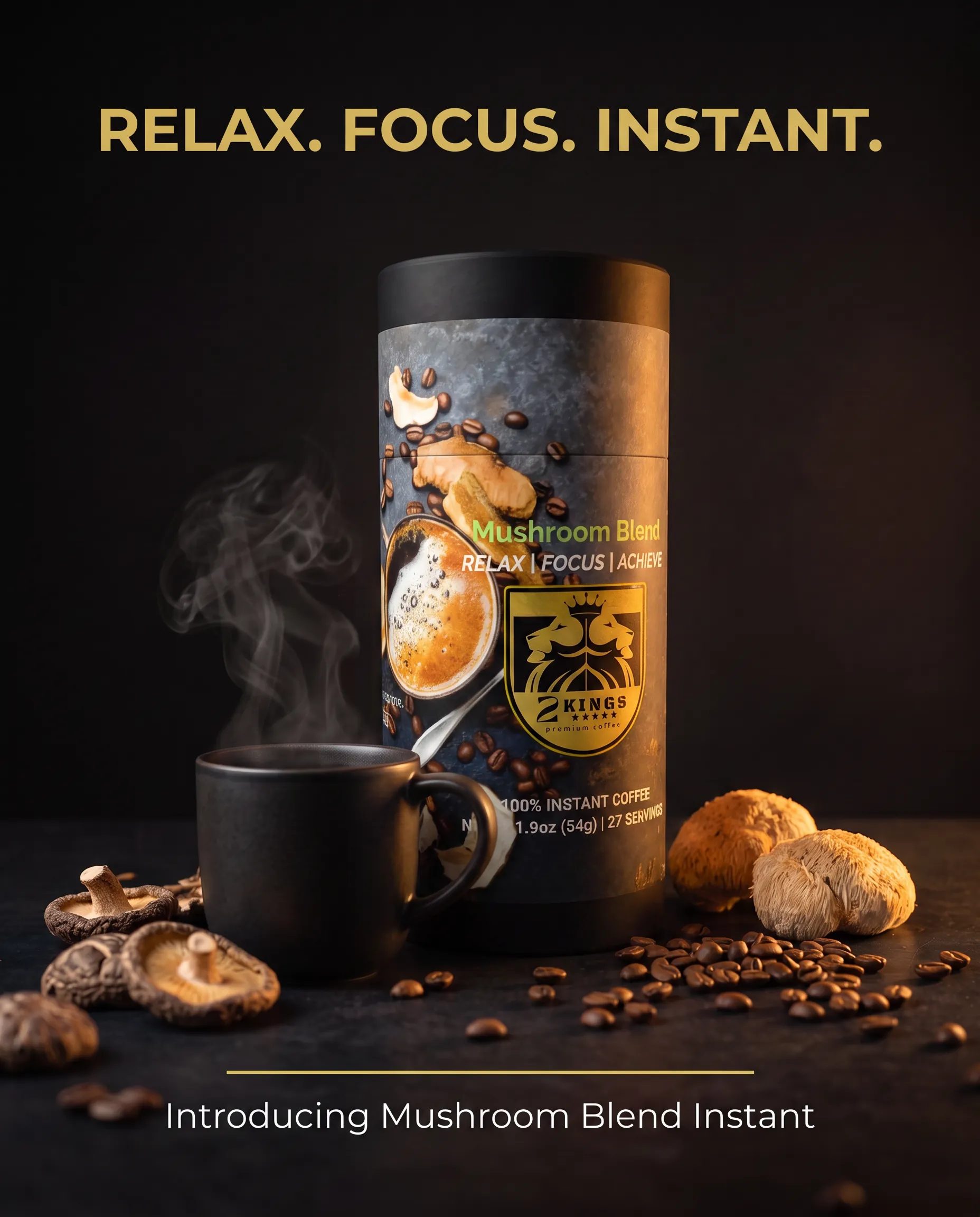
2 Kings Mushroom Blend Instant Coffee is made for a simple, satisfying cup: an earthy, rich, smooth medium roast that works when you want coffee without a long setup. It is best approached as coffee first, with a flavor profile and format that can earn a place in your routine.
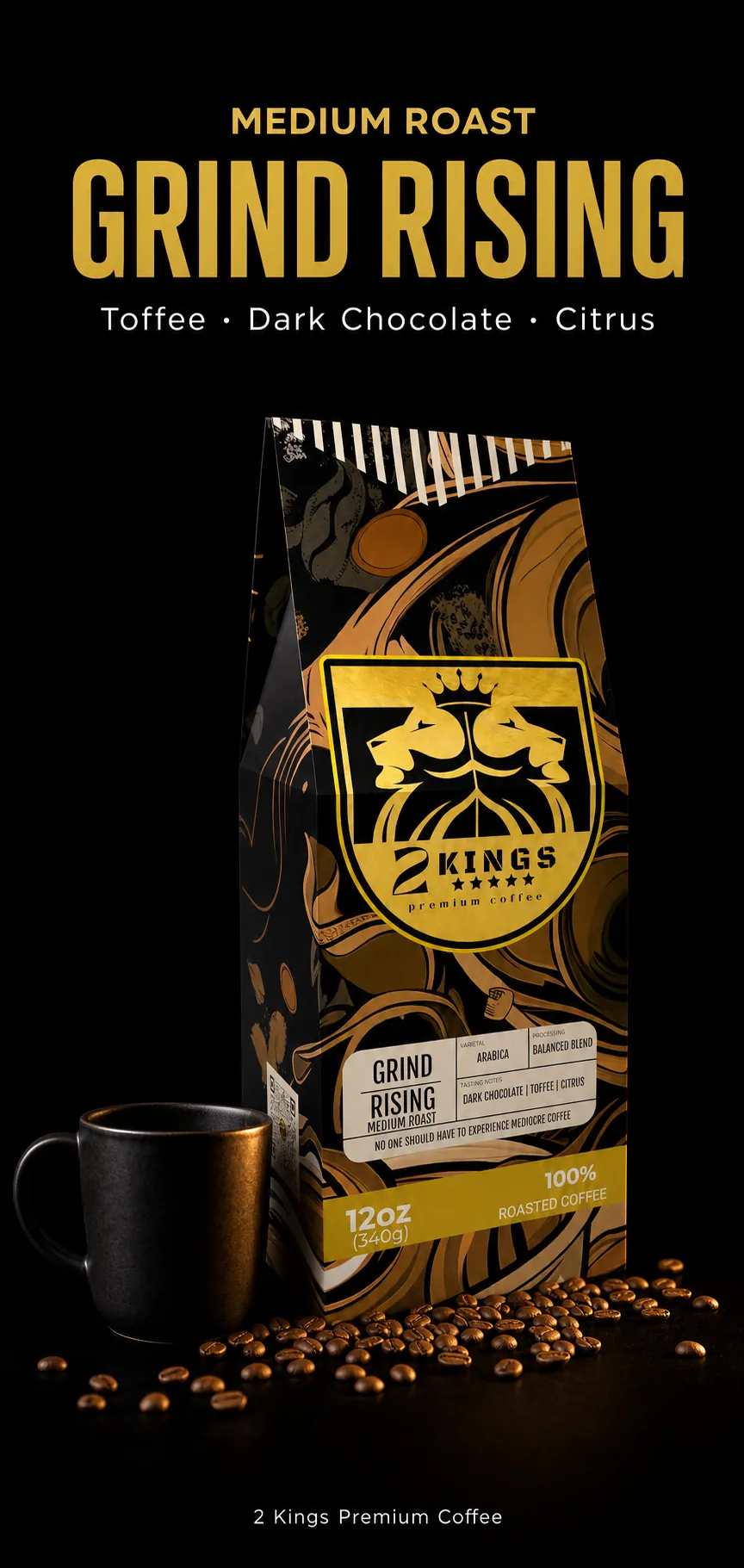
If that sounds like your kind of cup, explore the Mushroom Blend Instant Coffee. For days when you want to slow down with a different brew, the full 2 Kings coffee collection offers pods, blends, dark roasts, and single-origin options. Coffee does not need to do every job. It just needs to be good at the one you choose it for.
The Bottom Line
Mushroom coffee may offer a welcome change of pace, an earthy flavor profile, and in some cases a lower-caffeine option. Those are meaningful reasons to give it a try. The larger claims around focus, immunity, stress, inflammation, and energy are not established for mushroom coffee itself, so they should stay in the “still being studied” column.
Choose a blend with a transparent label. Keep your expectations grounded. And enjoy the cup for what it is: one more way to make your coffee routine feel like your own, whether that means a quiet weekday morning, a busy afternoon, or a simple travel-day ritual.

