Coffee roast levels are a useful way to narrow down a bag, but they are not a shortcut to exactly how a cup will taste. Light, medium, and dark roast describe how far the beans were roasted. They can point you toward brighter, more balanced, or deeper flavors, yet the coffee’s origin, processing, freshness, grind, and brew method all still have a say.
The practical answer is simple: choose roast by the flavors you enjoy, then adjust the way you brew for the strength you want. This guide gives you a clear starting point without asking you to memorize a roaster’s vocabulary before your first cup.
Coffee Roast Levels at a Glance
| Roast level | Often tastes like | A good fit for |
|---|---|---|
| Light | Bright, fruit-forward, tea-like, lively | People who enjoy citrus, berry, floral, or crisp flavors |
| Medium | Balanced, sweet, rounded, familiar | Everyday cups with chocolate, caramel, nut, or gentle fruit notes |
| Dark | Deep, roasty, bittersweet, full-bodied | People who enjoy cocoa, toasted flavors, and a richer finish |
These are useful directions, not hard rules. A light roast from one origin may taste like lemon and black tea, while another tastes like ripe fruit. A dark roast can feel smooth and chocolatey or smoky and intense depending on the coffee and the roast style. The National Coffee Association’s guide to roast levels makes the same important distinction: the bean’s own character still matters after roasting.
What Does Roast Level Actually Mean?
Roasting turns dense, pale green coffee beans into the aromatic brown beans that go into your brewer. As the roast goes further, the bean becomes darker, more brittle, and more visibly oily on the surface. The roasting process also changes the flavor balance. It can preserve more of the coffee’s origin character at a lighter level or bring more toasted, caramelized, and roasty character forward at a darker level.
That is why roast level is a helpful first filter, not a quality score. Dark roast is not automatically stronger, and light roast is not automatically sour. A well-made cup comes from finding a coffee and recipe that suit your taste. If a coffee feels too sharp, too heavy, or too flat, change one thing at a time before deciding the roast is the whole problem.
Light Roast: Brighter and More Origin-Led
Light roast coffee is roasted for less time, so it often holds onto more of the flavor character associated with where and how the coffee was grown. That can mean a brighter acidity, a lighter body, and flavor notes that remind people of citrus, berries, stone fruit, florals, or tea. Bright does not mean bad or overly sour. In a balanced cup, it is the lively quality that keeps the coffee from tasting dull.
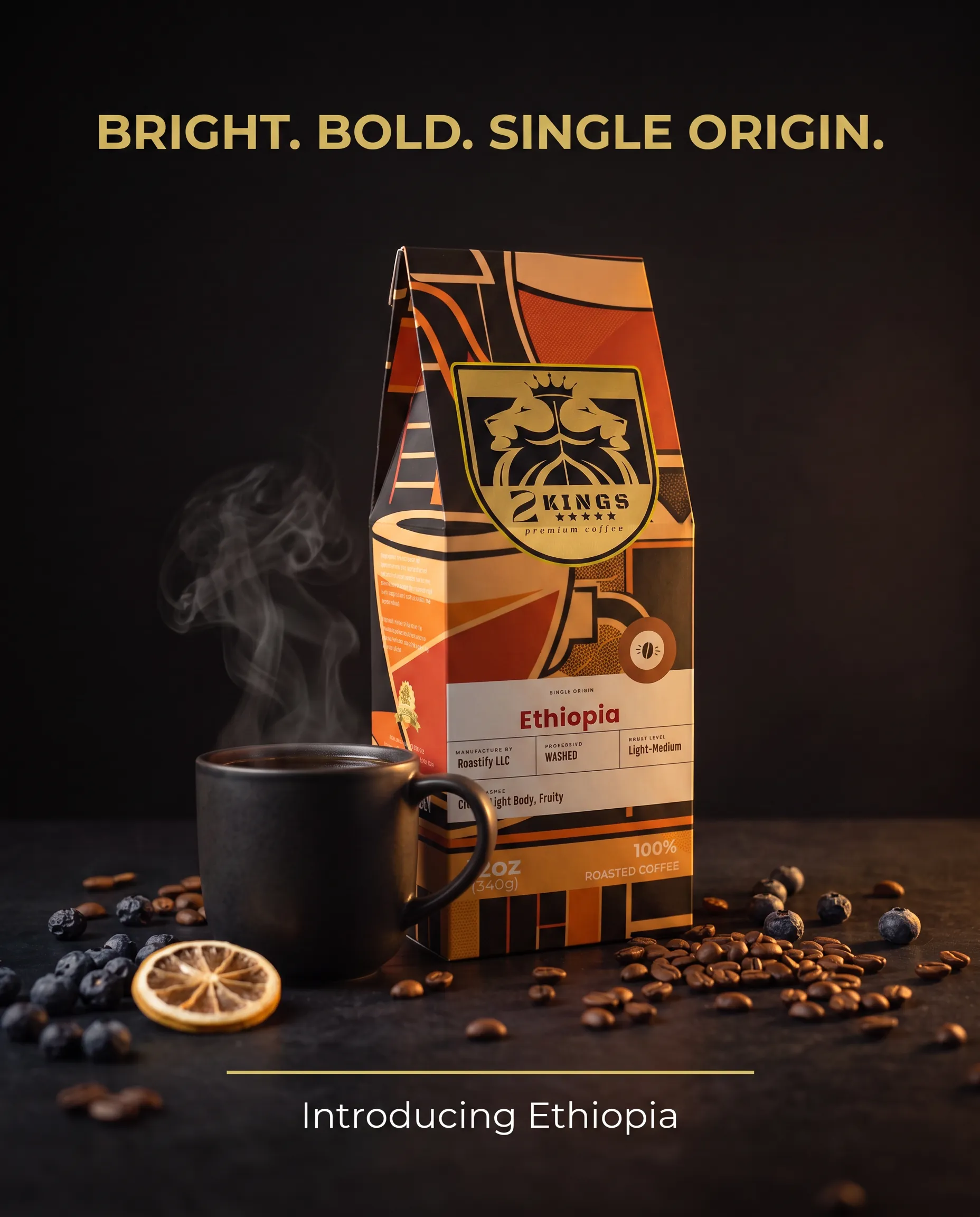
Try a lighter or fruit-forward coffee when you enjoy flavors such as blueberry, lemon, pear, or a crisp finish. 2 Kings Ethiopia is a useful example, with blueberry, lemon, and pear notes. Brew it with clean water and a recipe you can repeat, then use the coffee grind size guide to match the grounds to your brewer. That gives the coffee a fair chance to show its lighter character.
Medium Roast: The Everyday Middle Ground
Medium roast coffee is often where a coffee’s own character and the flavors created by roasting meet in the middle. It can still show fruit or citrus, while bringing in rounder notes like chocolate, caramel, toasted nuts, or maple. The result is commonly a balanced cup with enough brightness to stay interesting and enough body to feel familiar.

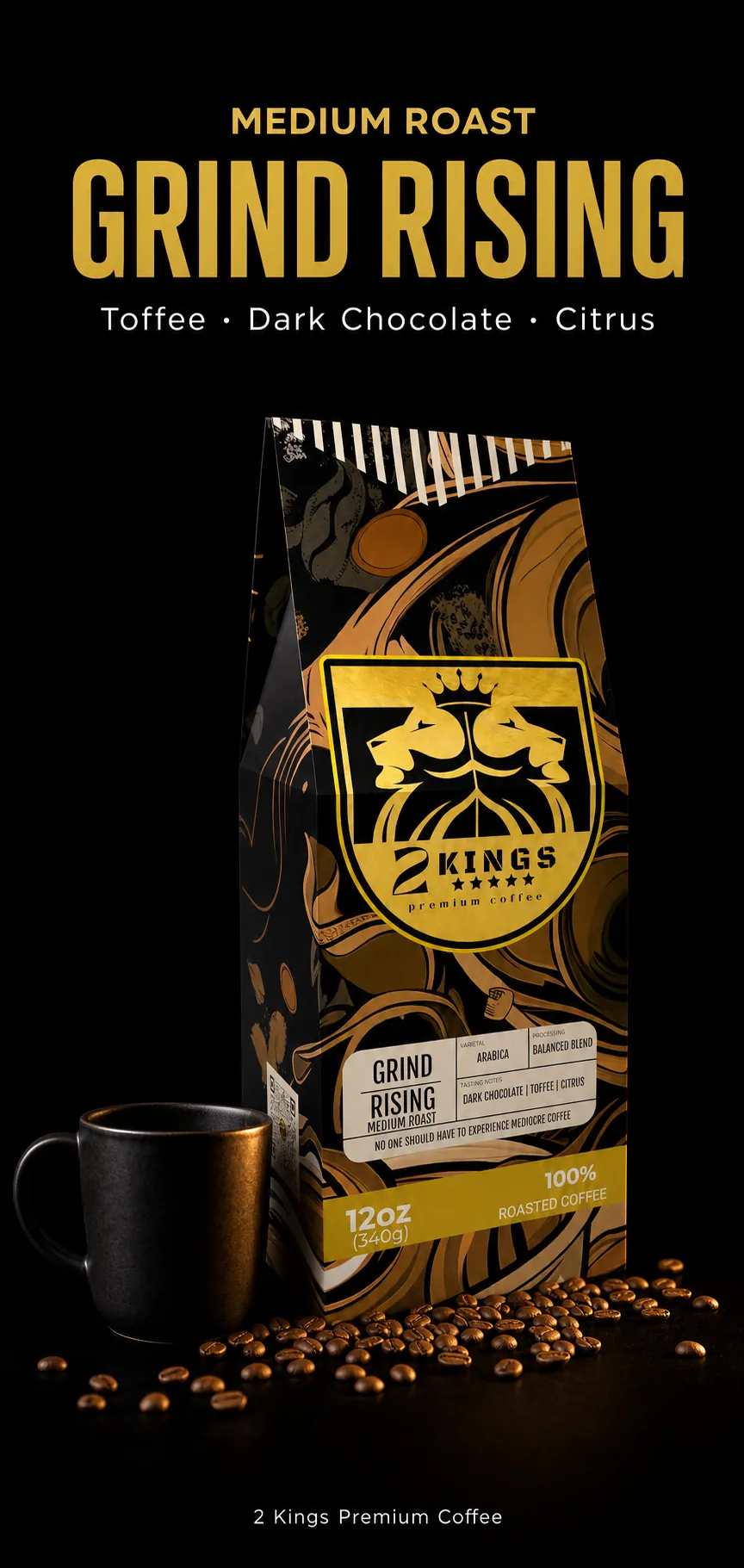
That balance makes medium roast a sensible place to start when you are buying for a household or building an everyday routine. 2 Kings House Blend brings together chocolate-covered almond, maple syrup, and citrus notes, while Grind Rising leans toward toffee, dark chocolate, and citrus. Neither is a promise that every sip tastes exactly like a dessert. Think of those notes as a map for the direction of the cup.
For a dependable first brew, keep the coffee amount steady and make a small adjustment only after you taste it. The coffee measurement guide gives you a simple starting ratio for an everyday drip machine, French press, or pour-over.
Dark Roast: Deeper, Toastier, and More Roasty
Dark roast coffee spends more time in the roaster, which brings the roast character forward. You may notice a fuller body and flavors that read as bittersweet chocolate, toasted sugar, baking cocoa, or a deeper finish. The coffee can still be balanced, but the roasty notes take more of the spotlight than the bright, fruit-led notes common in a lighter roast.

Choose dark roast when you enjoy a richer, more traditional coffee profile, especially with breakfast, milk, or a shorter, more concentrated brew. 2 Kings Lions Den is a practical place to start if baker’s chocolate and caramelized sugar sound like your kind of cup. Breakfast Blend offers another darker direction, with bittersweet chocolate and toasty notes.
A dark roast is not automatically more caffeinated or more concentrated than another coffee. If you want a bolder-tasting cup, first try a slightly stronger coffee-to-water ratio or a smaller brew setting. More water through the same amount of coffee can make any roast taste thin.
Does Dark Roast Coffee Have More Caffeine?
Not in a way that should decide which roast you buy. Roasting changes the bean’s size and density more than it changes the caffeine in a finished cup. When coffee is measured by weight, light and dark roasts are very close. When coffee is measured by scoop, a lighter roast can fit slightly more coffee into the scoop because the beans are denser.
In a real kitchen, your dose, cup size, and brew method matter much more. If you want to manage caffeine, pay attention to how much coffee you use and how many cups you drink, rather than treating roast color as a reliable caffeine scale. If you want a stronger flavor, use the roast you enjoy and adjust the recipe with a measured hand.
How to Choose the Right Coffee Roast for You
Start with flavors you already enjoy outside coffee. If you reach for citrus, berries, tea, or crisp fruit, a lighter coffee may be a good fit. If you like chocolate, caramel, maple, toasted nuts, and a rounded cup, begin with a medium roast. If you prefer baker’s chocolate, toasted sugar, and a deeper finish, try dark roast.
- Choose one flavor direction that sounds familiar.
- Brew it at the cup size you normally drink.
- Taste before adding milk or sweetener, then make it your usual way.
- Write down one honest note, such as “better with milk” or “want more brightness.”
- Change only one thing on the next brew: the coffee amount, grind, or roast direction.
That small test teaches you more than buying several similar bags at once. It also helps separate roast preference from brew strength. A coffee that is a little too bright at one ratio may be exactly right with a slightly fuller dose. A coffee that feels heavy in a large mug may shine at a smaller serving.
Roast Level Is the Start, Not the Whole Story
Roast level gives you a useful way into coffee, but it does not need to become a rulebook. Let it point you toward flavor, then pay attention to what happens in your own cup. Fresh coffee, a clean brewer, a sensible ratio, and one small adjustment at a time will tell you more than a label ever can.
When you are ready to compare a few directions, browse the 2 Kings coffee collection. Every order is roasted after you order and shipped the same day, giving you a fresher starting point for finding the cup you will want again tomorrow.

